How a charter yacht captain got two days a month back — and cancelled a $2,400/year subscription.
Three custom apps. One database. $7,250, one time.
The Client
A working charter yacht captain runs a small business like any other owner — except his office moves, his crew pays cash for everything from fuel to dayworkers, and his “back office” was whatever tools he could find: an enterprise software subscription, Apple Numbers spreadsheets, and a lot of manual effort squeezed in around actually running the vessel.
The Problem (two problems, actually)
Petty cash ate two days every month.
Crew members spend cash constantly — fuel, provisions, dayworkers, parts. The captain recorded every dollar by hand: collecting receipts, reviewing invoices and backup, typing everything into spreadsheets, then building charts to compare actual spend against the yearly budget. Two full days, every month, of a captain’s time spent on data entry.
His software subscription didn’t fit his boat.
He paid $200/month — $2,400 a year — for enterprise yacht-management software built for superyachts. Good software, wrong fit: it didn’t handle inventory or maintenance the way his operation actually ran, and it didn’t talk to his expense tracking. Enterprise prices for a partial fit, forever.
The Build
App 1 — Petty Cash ($750)
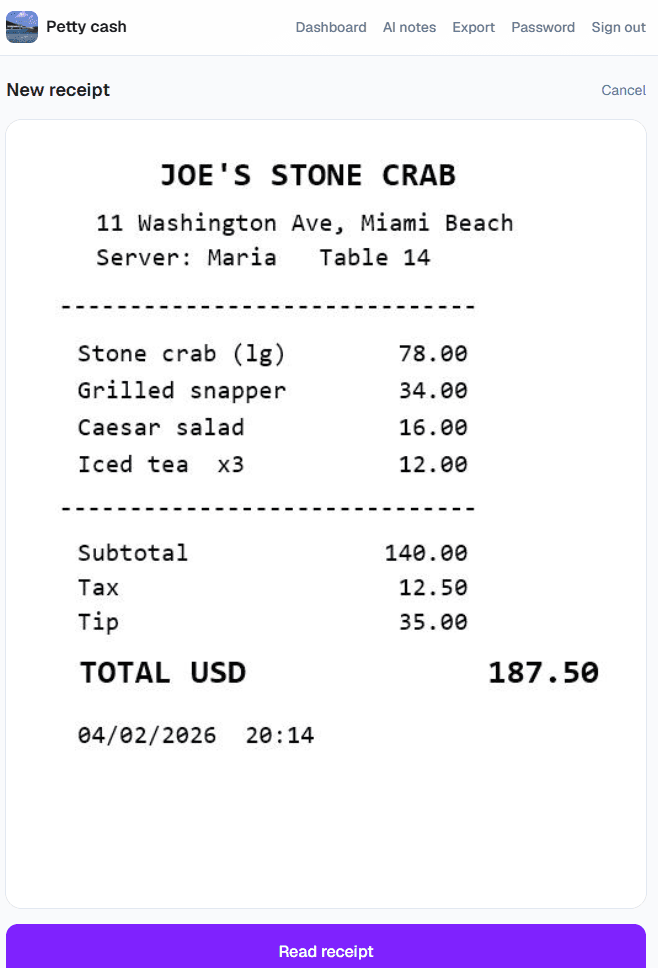
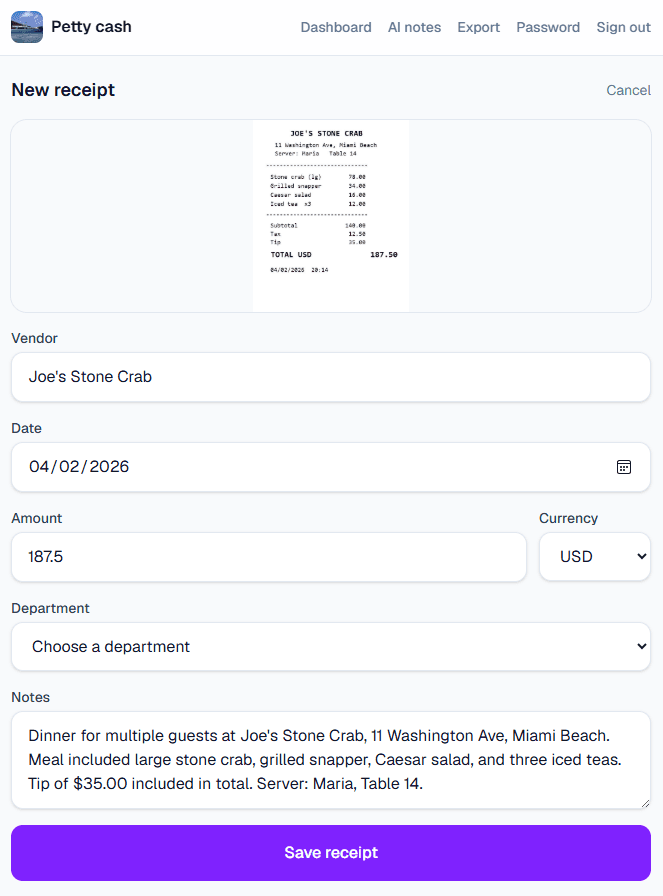
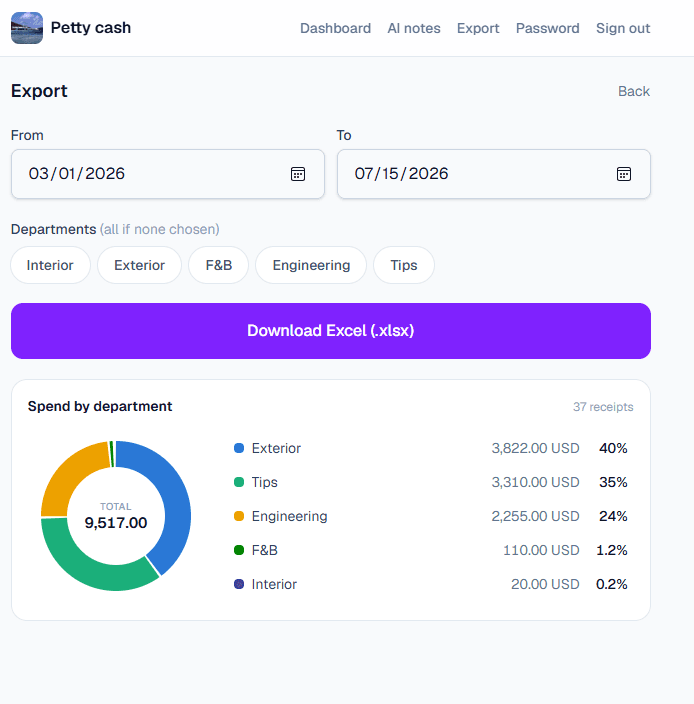
A phone app on every crew member’s home screen, branded with the vessel. A crew member photographs a receipt; AI reads it and extracts the vendor, amount, and details automatically. Expenses file by department — Interior, Exterior, F&B, Engineering, Tips. Paying a dayworker with no receipt? One tap for a manual entry. Everything searchable, every change logged, and the whole thing exports to Excel formatted the way the captain reports against budget.
App 2 — Vessel Operations ($6,500, with App 3)
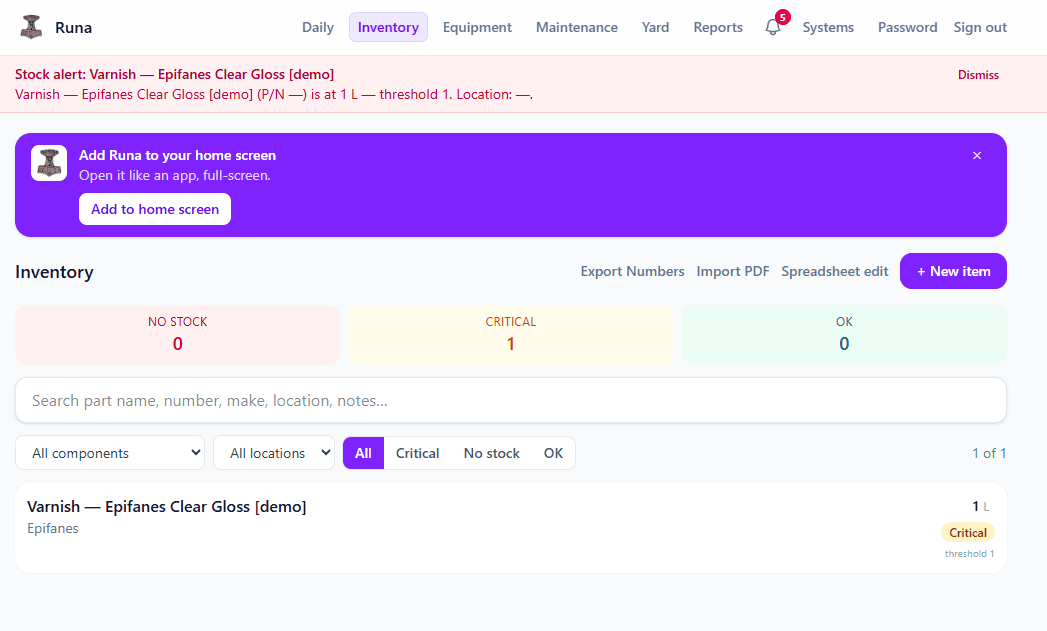
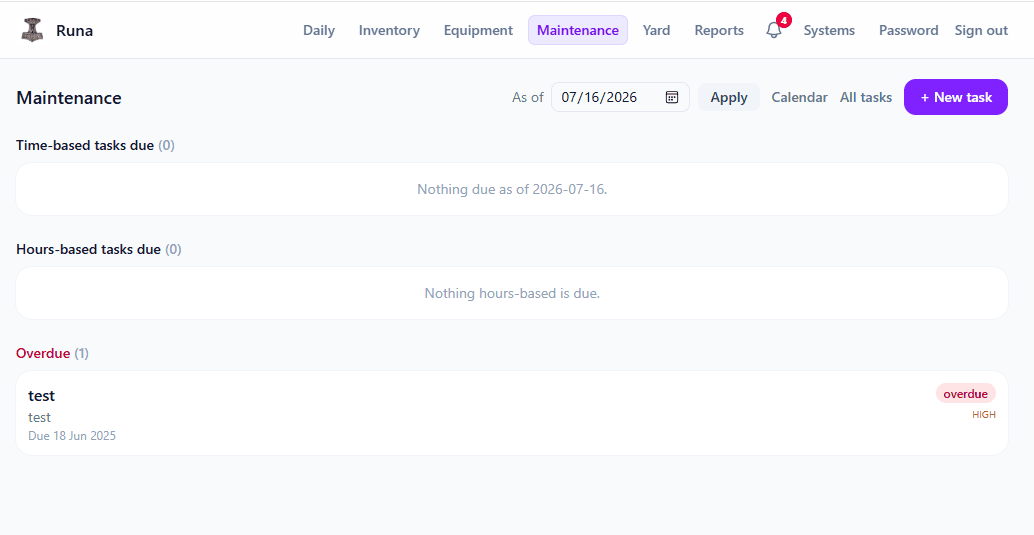
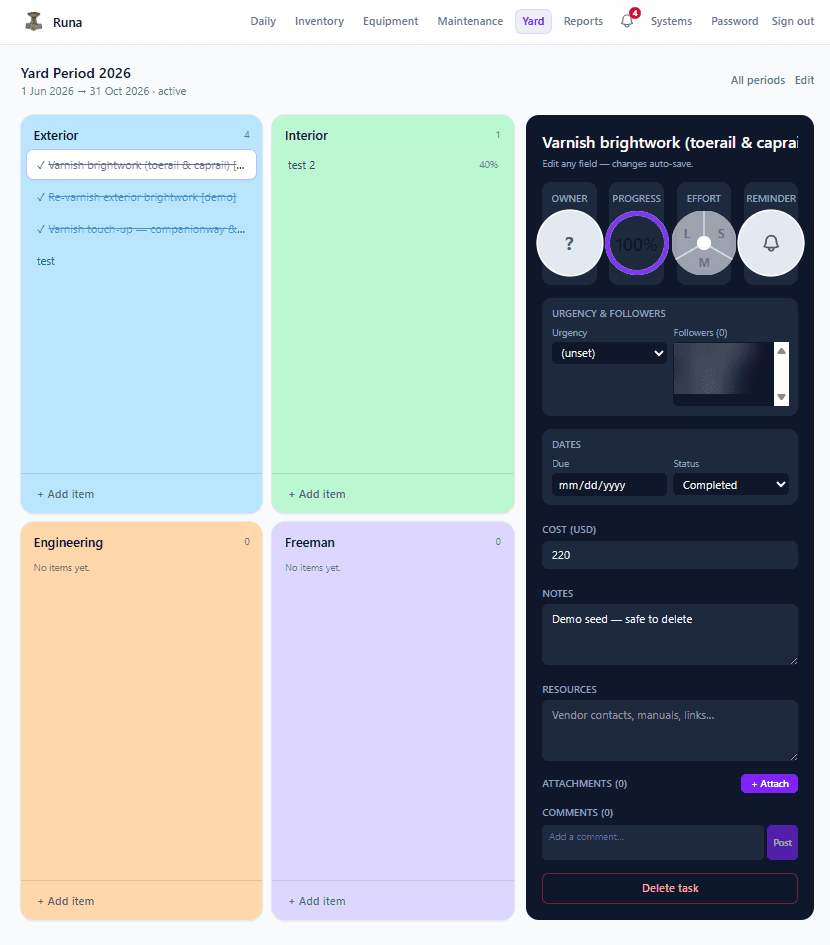
Inventory with a critical threshold on every item — when the varnish runs low, he gets an alert before it’s a problem. An equipment registry with maintenance scheduled by calendar date or engine hours, whichever each task needs. A yard-period dashboard organized the way he actually plans. Reports. And his existing data migrated in, so day one wasn’t a blank screen.
App 3 — AI Dry-Dock Planner (the one he came back for)
Then he brought a harder problem: planning a yard period. Now he photographs the engine room and the AI produces a disassembly plan in the right order — flagging, for example, that the air-conditioning unit has to come out before engine work starts, because the AC contractor books out about two weeks. Miss that dependency and the whole yard period stalls. The plan converts straight into scheduled yard tasks in the same system, and his years of inventory and yard-period spreadsheets imported in. Apps 2 and 3 together came to $6,500 — the whole three-app system, $7,250, one time.
The part no subscription offers
It’s one database. When a yard task says “varnish the brightwork,” the same system shows how much varnish is in inventory and what he paid for it last time. Expenses, inventory, and maintenance aren’t three products with three logins — they’re one system that knows his boat.
The Results
| Before | After | |
|---|---|---|
| Monthly expense reporting | 2 days of manual entry and chart-building | Crew photographs receipts; Excel report on demand |
| Captain's time recovered | — | ~24 days per year |
| Software subscription | $200/month, partial fit | $0/month — he owns the system |
| Inventory alerts | Not handled | Automatic, per-item thresholds he set himself |
| Maintenance tracking | Not handled by his subscription | Calendar- and engine-hours-based, with history |
| Yard-period planning | Memory, whiteboards, and old spreadsheets | Photograph the space → ordered work plan → scheduled tasks |
| Total investment | $2,400 every year, forever | $7,250 one time, three apps |
The petty cash app paid for itself in roughly the first month of recovered time. The operations system cancelled the $2,400-a-year subscription — and then kept growing: when the next problem (yard-period planning) came up, it was an expansion of a system he owns, not another subscription. And it didn’t stop there. His fourth build is live too — a different problem in a different domain entirely. That’s how this works: solve one problem, earn the next one.
The fourth build
The same client’s latest project has nothing to do with boats: a futures-trading journal with an AI coach. A P&L calendar built from his actual fills, AI analysis that diagnoses what’s going wrong in plain language, and trading rules mined from his own journal that he approves before the system enforces them. Different domain, same reason he came back — software shaped around how one specific person actually works, owned outright.
“Two days a month, back. $2,400 a year, cancelled.”
Could this work for your business?
If you’re paying monthly for software that almost fits — or burning days on a process you do by hand — the first step is the free SaaS Audit: 45 minutes, we list every subscription and manual process, and you see what one custom system would replace. No pitch deck. Just the math.
Book the Free SaaS Audit